Neuropathy confuses me to this day. I wish I could offer better advice here, but honestly, all I can offer is my specific experience.
It was something they asked me about before every infusion — when you sit down with the oncologist and he reviews all the tests and bloodwork with you. Because of that, I knew it was something many people experienced. It felt a little weird, because here I was, eight infusions deep and nothing. Some sparking, electric shocks when picking up cold stuff, really weird throat sensations — but not what they were describing as neuropathy.
False Sense of Security
All the extra stuff I was doing based on my research was starting to give me a false sense of security. Each scan was showing phenomenal progress — way outside what was typical. My bloodwork was so good it could have been identical to someone with no cancer, as my oncologist put it. He went so far as to say, “I’ve been doing this for 25 years and I’ve never had a healthier and more resilient stage 4 patient. You are a Greek god!”
I’m not bragging, just repeating his words. But I’m not going to lie either — those statements went to my head. Nothing could hurt me.
I’ve read many stories of patients getting neuropathy almost immediately after the first infusion. I just didn’t. And I’m not claiming anything, but I’m also not going to rule out that my protocol helped tremendously. I have no idea why I didn’t get what seemed to be a typical symptom response curve. I just know how my situation played out.
When It Finally Hit
It did start though. Maybe later than average, but it happened around my last and ninth infusion. Not only did it happen — it stuck. To this day, almost a year and a half after that final infusion, it’s still here.
And let me tell you, it’s anything but quick to get better or worse. It’s a slow-moving thing and it’s variable. I’m still researching to this day to find methods to hopefully help it.
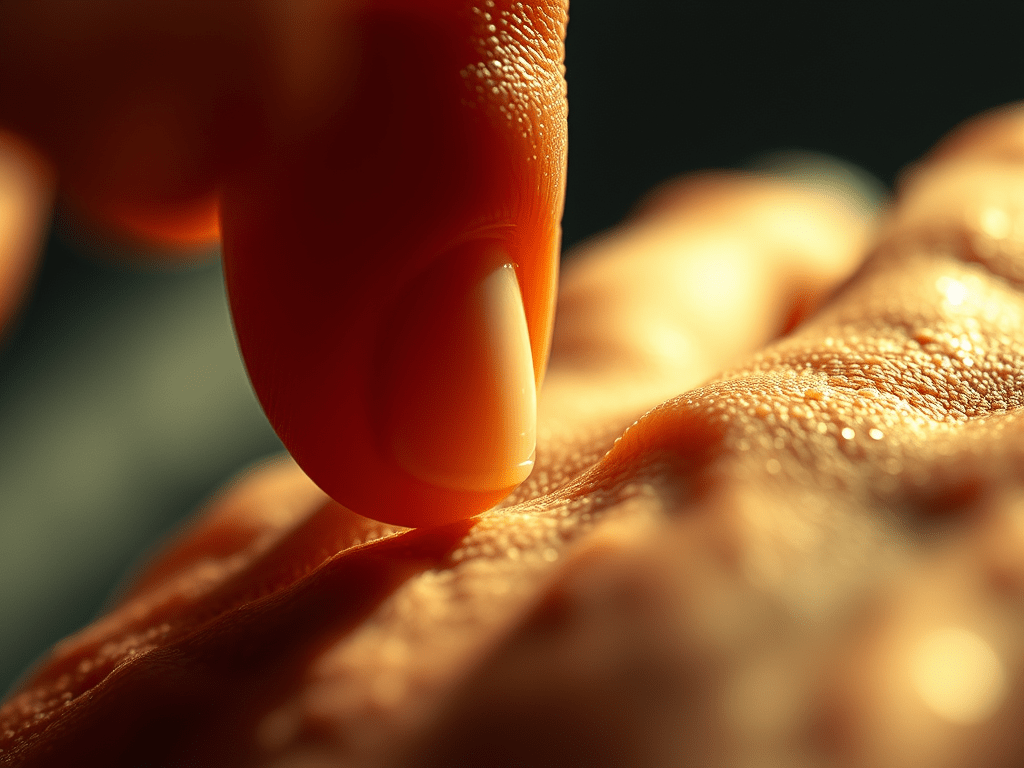
It has gotten better, but it’s still lingering in the background. It’s barely noticeable in my hands and much more present on the pads of my feet. It’s not painful — it feels like a weird numbness. There are times at night when it’s so noticeable I can’t bear to have the bottoms of my feet touch anything. Brushing against the sheets makes me jerk back and squirm. I wear socks to bed and that decreases the unsettling stimulation.
What I’m Doing About It
My next steps are to increase massaging of my feet to boost blood flow and restart acupuncture. Many patients swear by acupuncture for CIPN, and there’s growing clinical evidence to back it up — a 2020 study in JAMA Oncology found it significantly reduced symptoms compared to usual care.
Beyond that, here’s what’s showing real promise based on current research:
Supplements worth discussing with your oncologist:
- Alpha-lipoic acid (ALA) — a powerful antioxidant that’s been studied specifically for neuropathy. Multiple clinical trials show benefit for diabetic neuropathy, and it’s increasingly being looked at for chemo-induced cases. Typical doses studied range from 600–1,200 mg daily.
- Acetyl-L-carnitine (ALC) — supports mitochondrial function in nerve cells. The evidence is mixed — some trials showed benefit, others didn’t — but many patients report improvement. Worth a conversation with your doctor.
- B vitamins (B6 and B12) — essential for nerve health and myelin maintenance. Deficiency in either can worsen neuropathy on its own. Get your levels checked. Methylcobalamin (the active form of B12) is generally preferred over cyanocobalamin for nerve support.
The one FDA-backed medication:
- Duloxetine (Cymbalta) — this is the only medication the American Society of Clinical Oncology (ASCO) currently recommends for established chemo-induced neuropathy. It’s an antidepressant that also modulates pain signaling. Not everyone tolerates it, but for some patients it makes a significant difference.
Other approaches gaining traction:
- Scrambler therapy — a newer electrostimulation technique that’s showing strong results in clinical trials for CIPN. It essentially retrains the nerve signals. Not widely available yet, but worth looking into if you have access.
- Physical therapy focused on sensory retraining — specific exercises that challenge your proprioception and gradually desensitize affected areas.
Day to Day
Keep your extremities fully warm — that really helps dull the sensation. For me it goes up and down. There are days, particularly in the morning, where it’s barely noticeable. Then there are nights where its call to attention is extreme.
Reddit is a fantastic platform to actually talk with people going through this. You can help those behind you and get experienced advice from those ahead of you — things they won’t or can’t say in a clinic.
The oncologist PA told me, “I tell all my patients — whatever you feel one year from the last infusion, that’s your new baseline.” I don’t discount her statement, but I know from experience in other areas during this journey that research and persistence are your best advocates in this fight.
And just as cancer treatment seems to be evolving on a daily basis, there are other areas of medicine doing the exact same thing — nerve regeneration and nerve remyelination is exactly one of those fields. So we can continue this journey together to heal, just as we have with cancer.
You are among great company.
— Aaron M.
Keep reading:
 The CRC Roadmap
Leave a comment